

Protected mobility for warfighters is provided by infantry fighting vehicles (IFV), armoured personnel carriers (APC) and light armoured vehicles (LAV). Their tactical employment in frontline operations differs based on the level of protection they offer and the weapon systems they carry.
What these protected mobility platforms have in common is their exposure to CBRN threats while moving toward or operating in frontline areas. An adversary may deliberately employ chemical warfare agents (CWA) or toxic industrial compounds (TIC) to deny access to terrain that would otherwise be advantageous to armoured forces on the move.
How do Different Protected Mobility Vehicles Support Frontline Operations?
IFVs are designed to insert troops as close as possible to the combat area while providing continuous fire support through 20–40 mm autocannons and light to heavy machine guns. They typically offer the highest level of armour protection, allowing them to withstand larger calibre ammunition and thus provide greater survivability for warfighters. Representative examples include the BAE Systems CV90, the Bradley, and the General Dynamics Ajax.
APCs and LAVs are generally used to transport six to eleven warfighters to protected positions behind the frontline and are also commonly employed for casualty evacuation during and after combat. Due to lighter armour, these vehicles are usually withdrawn from immediate contact areas and operate from safer positions, where they can still provide supporting fire against light targets using machine guns. Their armour is typically designed to resist light to heavy machine gun fire and artillery shrapnel, improving protection for troops on the move. Typical examples include the Patria AMV and CAVS, General Dynamics Pandur and Piranha, and the Rheinmetall Fuchs/Fox.

Patria 6×6 vehicle is built on the heritage of Patria’s iconic armoured wheeled vehicles that has been used in various peacekeeping and crises management missions.
What CBRN Threats Are Most Likely to be Encountered on the Battlefield?
Historically, the most probable CBRN threat on the battlefield has been the use of chemical agents intended to disable or disrupt enemy forces with near-immediate effect. A wide range of chemical warfare agents has been employed for both direct effects against troops and for area denial purposes.
Modern conflicts have demonstrated increased use of toxic industrial compounds, as well as extensive use of crowd control substances in battlefield environments. Chemical warfare agents and crowd control substances are prohibited in combat under international treaties, whereas TICs may be released unintentionally, for example through the destruction of ammonia storage tanks or other industrial infrastructure.
Some gases, such as chlorine and phosgene, are classified both as CWAs and TICs. These substances may be legally present in industrial areas or transported in cargo containers, as they are widely used as intermediates in chemical processes.
Radiological and biological threats generally take much longer to affect humans. Decontamination of areas contaminated by radioactive or biological agents is resource-intensive, effectively denying access even to the party that deployed them. By contrast, most toxic gases evaporate and disperse within hours to concentrations that are no longer harmful.
How is CBRN Protection Implemented in Protected Mobility Vehicles?
At a minimum, CBRN protection for warfighters relies on personal protective equipment, primarily the protective mask. However, without early warning, there is no reliable way to determine when masks must be worn until personnel begin showing symptoms of exposure.
This risk can be mitigated by equipping every vehicle carrying warfighters with an early warning chemical detector such as the ChemProX-DS. When the detector alarms, indicating dangerous concentrations of toxic gas in the external air, warfighters can don their masks before exposure occurs.
The highest level of CBRN protection is achieved by integrating an overpressure system with CBRN filtration into the vehicle’s ventilation and air-conditioning system. In such a configuration, the ChemProX-DS automatically activates filtration when concentrations of CWA or TIC exceed alarm thresholds. Detecting contaminants in the outside air before filtration is engaged ensures that the vehicle interior remains safe at the moment filtration begins.
What Operational Decisions Are Enabled by Onboard CBRN Detection & Protection?
CBRN detection combined with integrated filtration provides the vehicle commander with critical decision-making time. The commander can assess whether it is tactically acceptable to traverse a contaminated area or whether it is preferable to withdraw to a clean zone and continue the mission from there. Maintaining mobility while preserving both crew safety and vehicle combat effectiveness is the overriding objective.
Upon reaching the deployment area, a final assessment of external air quality is conducted before warfighters dismount. If toxic chemicals are detected, both the vehicle crew and dismounted troops must wear protective masks, as opening vehicle doors compromises internal overpressure and prevents the system from maintaining a protected environment during troop deployment.
All brand, vehicle and product names are used for identification purposes only. The use does not constitute any kind of endorsement for the brands, vehicles or products.
Would you like to know more?
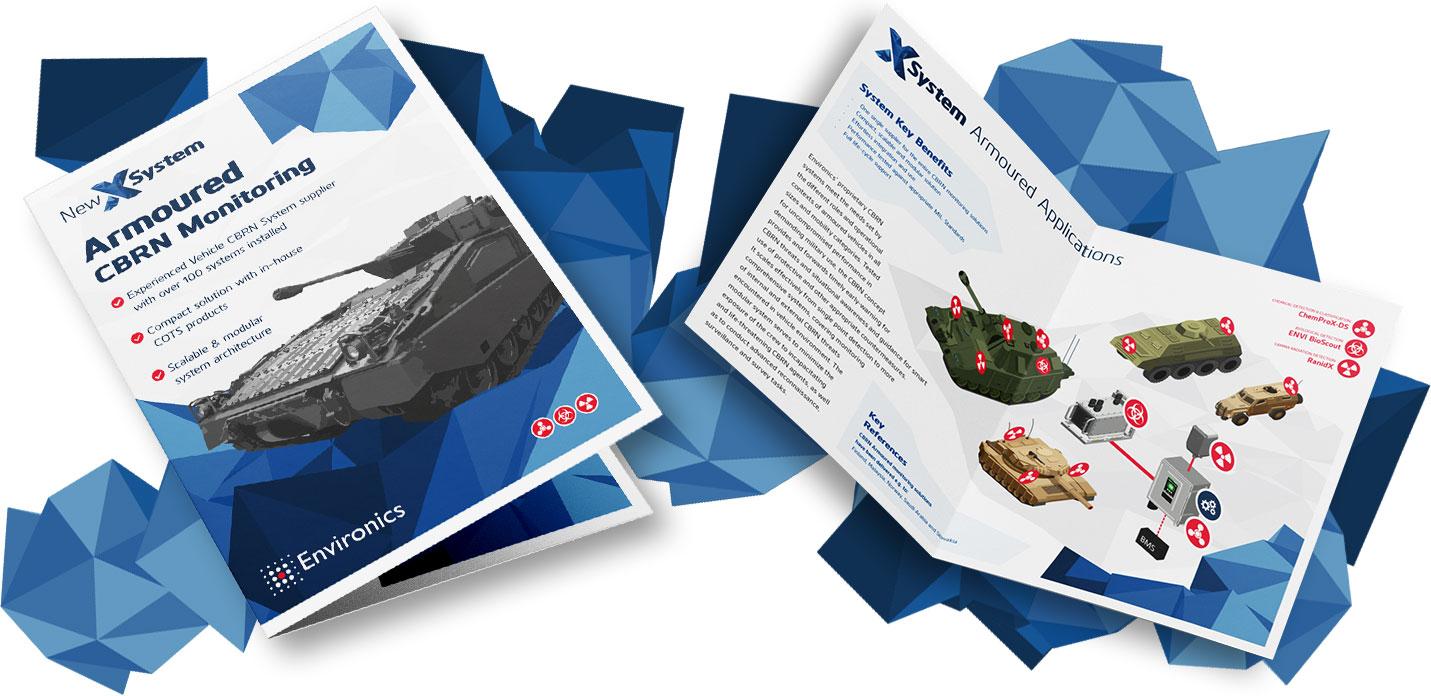
Download the Armoured CBRN Monitoring Application Note and gain access to exclusive content on X-System when used in armoured military vehicles.
Leave a Reply