

CBRN Solutions for Military
Conventional CBRN weapons and toxic industrial hazards are an ever-evolving threat that defence and armed forces troops must be aware of.
Real-time CBRN situational awareness is critical for effective risk assessment, and tactical and operational decision making in domestic and international operations.
Bertin Environics provides commanding officers with reliable, adaptable monitoring solutions for a variety of situations and scenarios. Our system solutions are designed to fulfil Military Special Forces’ operational needs, providing surveillance and reporting capabilities.
Benefits
Why Choose CBRN Solutions for Military

Chemical

Biological
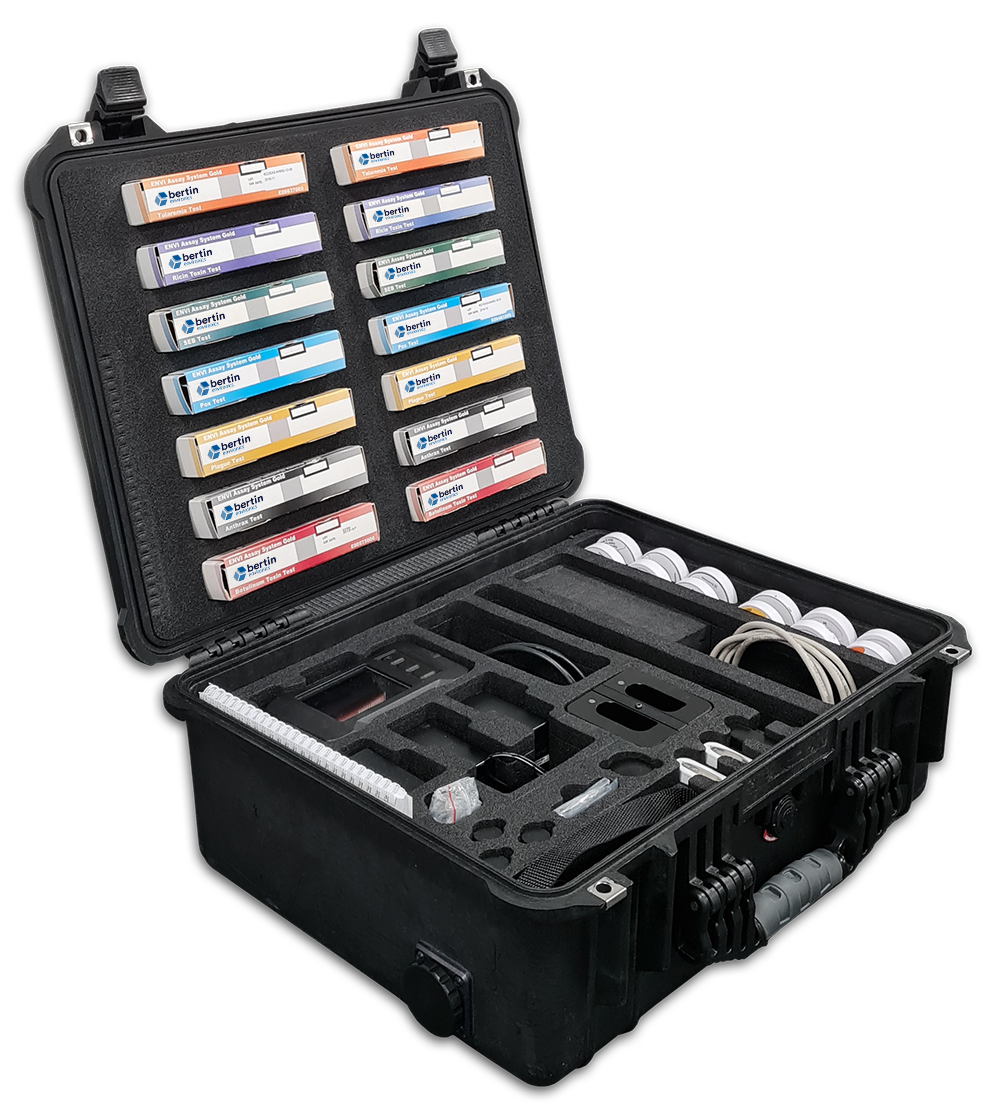
- Early detection of biological warfare agents
- Fast, simple, and reliable BWA identification
- Separate assays for ricin toxin, botulinum toxin, anthrax, pox, plague, tularemia and SEB
- No special training required
Radiological
- Portable radionuclide identification for detecting illicit radioactive materials
- Prevention against dirty bombs or radiological dispersal device
- Accurate directional information of the radioactivity source location within seconds
- Full reach back capabilities with easy-to-use expert solutions
Usage Scenarios
Applications
Armed forces may require CBRN defense solutions in several different scenarios and situations such as CBRN terrorist attacks, national and international crisis management, surveying and marking perimeters of hazardous areas, support of civil authorities, CBRN military missions, among others. Learn more about the applications of Bertin Environics’ CBRN solutions for military applications:
FAQs on Bertin Environics CBRN Monitoring Solutions for Military
Why are CBRN capabilities critical for modern military operations?
CBRN capabilities are critical for modern military operations because chemical, biological, radiological, and nuclear threats can disrupt missions, degrade combat power, and cause mass casualties among military forces and civilian populations. CBRN defence enables forces to anticipate hazards, protect personnel, maintain freedom of movement, and continue operations in contaminated or high-risk environments. Effective CBRN capabilities support preparedness, deterrence, and resilience across tactical, operational, and strategic levels.
What types of CBRN threats must military forces be prepared to address?
Military forces must be prepared to address a wide spectrum of CBRN threats, including Chemical Warfare Agents (CWAs), Toxic Industrial Chemicals (TICs), radiological hazards, and potential biological agents. These threats may arise from deliberate attacks, hybrid warfare, industrial accidents, or collateral effects of operations in urban and industrialized areas. The increasing availability of dual-use chemicals and emerging agents further expands the CBRN risk landscape faced by armed forces.
How does early warning detection fit into a broader CBRN defence strategy?
Early warning detection is a foundational element of CBRN defence because it enables forces to recognize hazards before exposure occurs and initiate timely protective actions. Within a broader CBRN strategy, early warning supports reconnaissance, surveillance, monitoring, and risk assessment activities. It provides commanders and CBRN staff with the information needed to manage contamination, protect forces, and integrate follow-on actions such as confirmation, medical response, and decontamination.
Why is multi-sensor and orthogonal detection important for CBRN operations?
Multi-sensor and orthogonal detection are important for CBRN operations because no single sensor technology can reliably detect or characterize all CBRN hazards under field conditions. Combining sensors based on different detection principles increases confidence in detection results and supports better classification of threats. Military doctrines emphasize orthogonal detection as a means to reduce uncertainty, improve situational awareness, and support informed decision-making in complex CBRN environments.
How do CBRN detection and monitoring capabilities support command decisions and force protection?
CBRN detection and monitoring capabilities support command decisions by providing timely, actionable information on the presence, type, and extent of hazards. This information enables commanders to warn units, adjust maneuver plans, prioritize medical and protective measures, and manage contaminated areas. By supporting rapid assessment and response, CBRN detection capabilities directly contribute to force protection, mission continuity, and operational effectiveness.