
Mission-ready CBRN detection enables first responders to identify and manage chemical, biological, radiological, and nuclear threats in dynamic and high-risk operational environments. Integrated detection platforms allow responders to maintain situational awareness, enhance safety, and improve operational efficiency when confronting complex hazard scenarios.
How Does ChemProX Function as a CBRN Detection Platform in a Case Scenario?
ChemProX functions as an integrated CBRN detection platform capable of identifying and monitoring multiple hazard types simultaneously. It supports first responders by combining chemical detection with radiological monitoring in a single operational device, allowing teams to assess threats efficiently while maintaining responder safety.
How Does ChemProX Enable Multi-threat Detection in a Real-world HazMat Response?
ChemProX supports multi-threat detection during real-world hazardous materials incidents by enabling responders to simultaneously monitor chemical releases and potential radiological hazards.
In one operational scenario, a HAZMAT team responded to a freight train derailment involving industrial cargo. Initial reports confirmed the presence of hazardous chemical materials and radioactive Class 7 cargo being transported for off-site handling and disposal. Several railcar containers were damaged, and visible vapor or smoke was venting from one container.
How is the ChemProX CBRN Kit used Operationally in the Field?
The HAZMAT team got a call reporting that a freight train transporting industrial material had de-railed. Based on the gathered information and reports, it was confirmed that the train was transporting a dangerous chemical and radiological material away from the industrial area, for proper handling and disposal. It was reported that some of the containers on the train had been damaged, and visible vapor / smoke was seen coming out from one of the containers.
At that moment, there was no further information gathered on the possibility of a radioactive material leak. However, as radiation threats are more or less invisible, the hazardous material team chose to equip the ChemProX chemical detectors with Radiation Detector Module, that is simply plugged in and integrated directly to the user interface of ChemProX, to detect the potential presence of any radiation.

HazMat operator assessing the potential presence of chemical threats at a derailment scene utilizing ChemProX’s CBRN detection capabilities.
Upon arrival at the scene, the HAZMAT team confirmed that something was evaporating from the damaged containers. At that point it was not a top priority to pinpoint the actual source for the leaking chemical, as the chemical was already evaporating. The team quickly established evacuation protocols and isolated the surroundings of the accident site.
Simultaneously, the gathered information revealed the train was carrying Chlorine. Each team member equipped with ChemProX was able to check general characteristics, required isolation / protection areas etc. relevant information regarding Chlorine from in built-in agent database of ChemProX.
Since the Chlorine gas was spreading, the priority – along with stopping the spreading – was to understand where and how far the gas cloud had spread. Utilizing the built-in wireless communications of ChemProX, the team immediately established a monitoring network by placing the detectors around the area. Some of the detectors were mounted on Unmanned Air Vehicles while others were used as stationary monitoring units. Establishing the monitoring network allowed the HAZMAT team to form a “big picture” of the incident and focus their efforts on the primary task – protecting and saving lives.
While evacuation protocols were in progress, some of the team members focused on stopping the chemical spread from the damaged containers. Based on the gathered data, the train was also carrying a radioactive material. While visual observations indicated no spreading of radioactive material, the team confirmed that the train was carrying class 7 goods.
While having an integrated detector for radiation, it was still essential for detecting potential radiation threats in the accident hot zone. Based on the detection results, there was no imminent radioactive threat present, which gave the first responders confidence to focus on isolating the leaking chemical containers.
How Does ChemProX Provide Broad Operational Capability as a Single Device?
ChemProX provides broad operational capability by integrating multiple detection technologies into a compact, field-ready platform. This integrated design allows responders to operate safely and efficiently when confronting complex incidents where multiple hazard types may be present simultaneously, including hazards that are not immediately visible or detectable.
ChemProX, One Device Broad Xperience
What Are the Benefits of Simultaneous Chemical & Radiation Detection?
The nature of this case showcases how important it is to be prepared for multiple types of threats – especially when every hazard isn’t always obvious or clearly visible. This can be achieved when CBRN detection is available in a compact package. To summarize, here are the benefits that simultaneous chemical and radiological detection can offer:
- Increased safety – It should never be assumed all threats are visible. Ensuring safety from invisible radiological threats ensures that the first responders can focus their efforts on eliminating the chemical threat.
- Simplicity – No need to carry two different and independent devices that need to be operated separately.
- Data integrity – Measurement data is available in a single, easy to read format / interface.
- Improved situational awareness – Constantly shared real-time data quickens informed decision making and helps getting control of the situation.
- Diversity / scalability – Multipurpose detector that is easily scalable based on the nature of the accident. Communication capabilities enable the versatile use either as a personal protection detector or as a part of a stationary or mobile chemical monitor.
How Does Integrated CBRN Detection Improve Responder Safety, Mission Effectiveness, & Public Protection?
Integrated CBRN detection improves responder safety, mission effectiveness, and public protection by providing comprehensive multi-hazard monitoring in a compact and deployable platform. During high-risk incidents, the ability to detect chemical and radiological threats simultaneously allows responders to assess hazards more rapidly, make informed operational decisions, and implement protective actions that reduce risks to both response personnel and the public.
Would you like to know more?
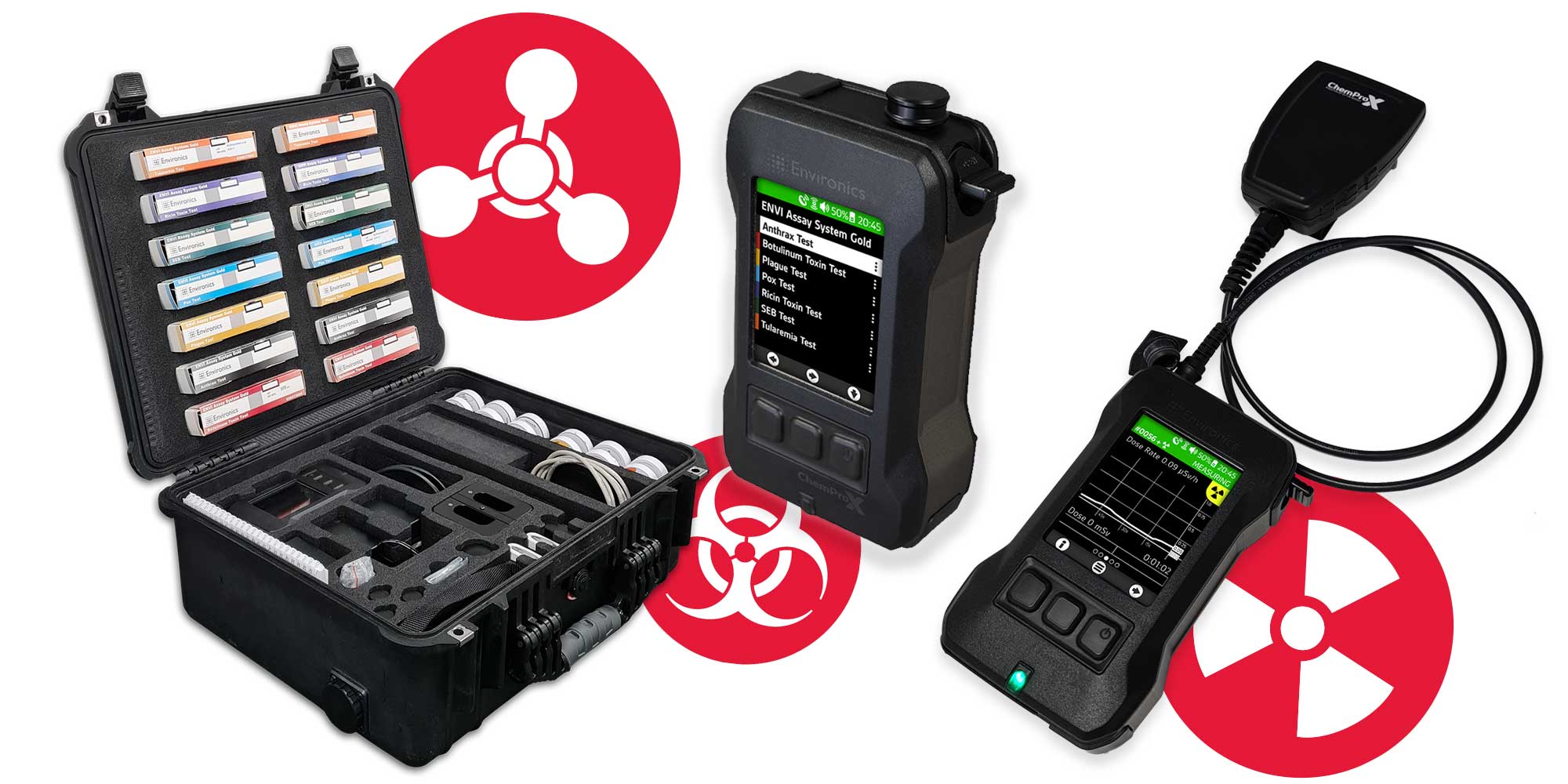
ChemProX CBRN Kit is a comprehensive set that expands ChemProX next generation handheld chemical detector for full CBRN threat detection. The CBRN kit turns the ChemProX chemical detector into a CBRN detector.
Download the ChemProX CBRN Kit datasheet and gain access to exclusive content on this complete CBRN threat detection set.
Leave a Reply