
Mission-Ready CBRN Detection for Multi-Threat Incidents
Every hazardous materials incident begins with uncertainty. Whether responding to an industrial chemical release, a transportation accident, a suspicious package, or an illicit laboratory, emergency responders rarely know exactly what they will encounter before arriving on scene. While chemical hazards are often the primary concern, many incidents can also involve biological or radiological threats. Responders need equipment that delivers reliable information quickly, without adding complexity during already demanding operations.
Modern HazMat Incidents Require More Than Chemical Detection
Today’s hazardous materials incidents extend well beyond traditional chemical spills. Emergency response teams are increasingly called to incidents involving unknown powders, industrial facilities, transportation accidents, clandestine laboratories, radioactive sources, and suspicious packages.
Many of these environments present multiple hazards simultaneously. A seemingly routine chemical incident may also involve radioactive materials, biological agents, oxygen-deficient atmospheres, or flammable gases. Relying on a single-purpose detector can leave critical threats unidentified during the early stages of an incident.
This is why modern CBRN detection focuses on providing situational awareness across chemical, biological, and radiological hazards through an integrated platform rather than requiring responders to carry multiple independent instruments.
A Realistic Multi-Threat Response
Imagine a local government office reports that an envelope released an unknown white powder when opened. Initially considered an isolated incident, several employees soon develop symptoms, prompting a hazardous materials response after additional intelligence links the event to a nearby illicit laboratory.
Before personnel enter the suspected facility, the Incident Commander deploys a reconnaissance team to determine whether chemical, biological, or radiological hazards are present.
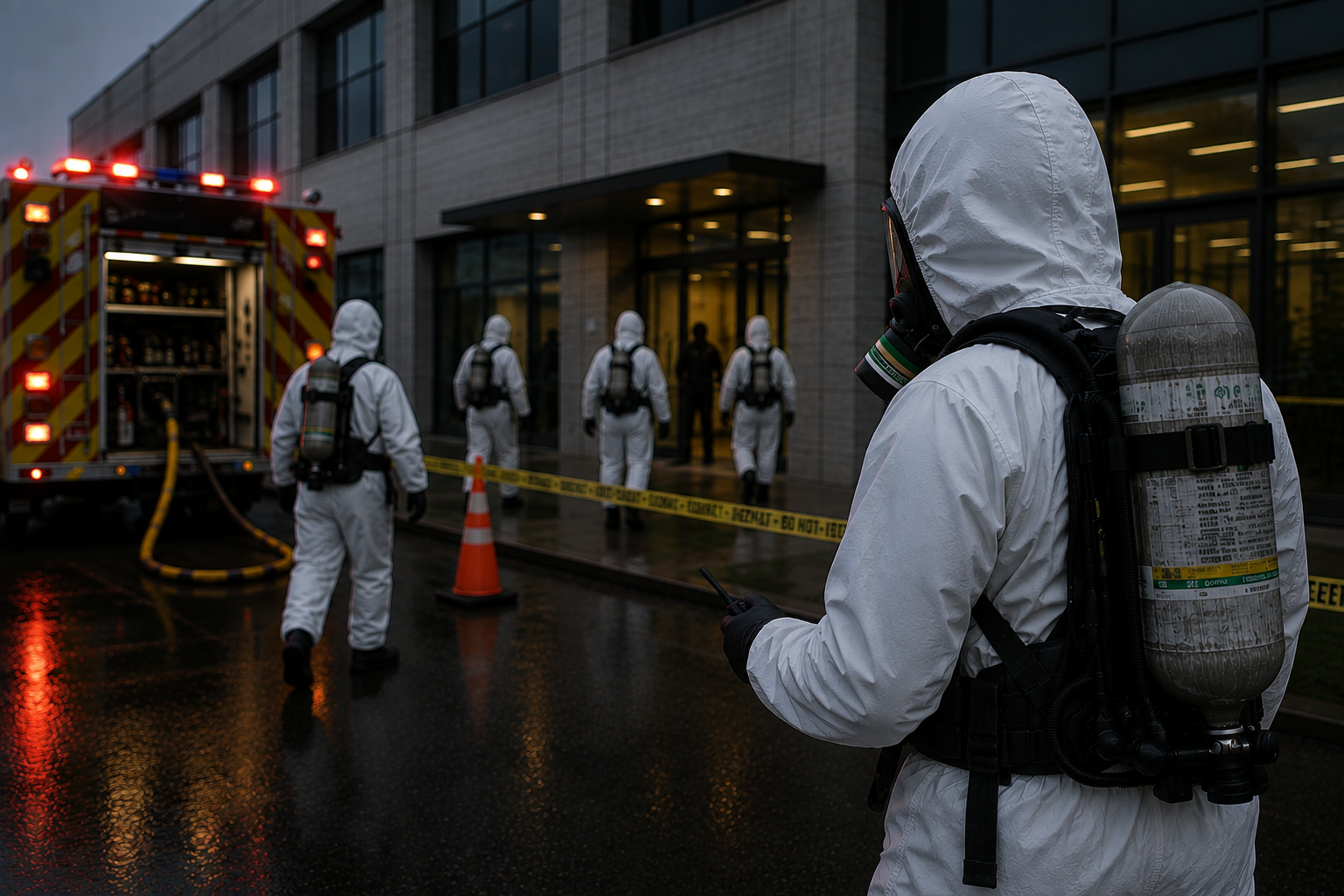
A HazMat reconnaissance team prepares to assess a suspected multi-threat environment for potential chemical, biological, and radiological hazards.
As responders establish operational zones and begin surveying the structure, a handheld detector immediately identifies hazardous chemical vapors, allowing crews to adjust their protective measures before entering contaminated areas.
Further investigation reveals laboratory equipment, suspicious containers, and materials that may indicate additional biological or radiological risks. Using a modular detection platform, responders can rapidly assess multiple threat types, document findings, and provide Incident Command with the information needed to make informed operational decisions.
Instead of switching between several standalone instruments, the team maintains continuous situational awareness using a single integrated solution that streamlines field operations and supports faster decision-making.
From Detection to Actionable Information
Detection alone is not enough. During a fast-moving incident, responders need information they can understand and act on immediately. Conventional chemical detectors may indicate that chemicals are present, but interpreting what that signal means can still be left to the operator.
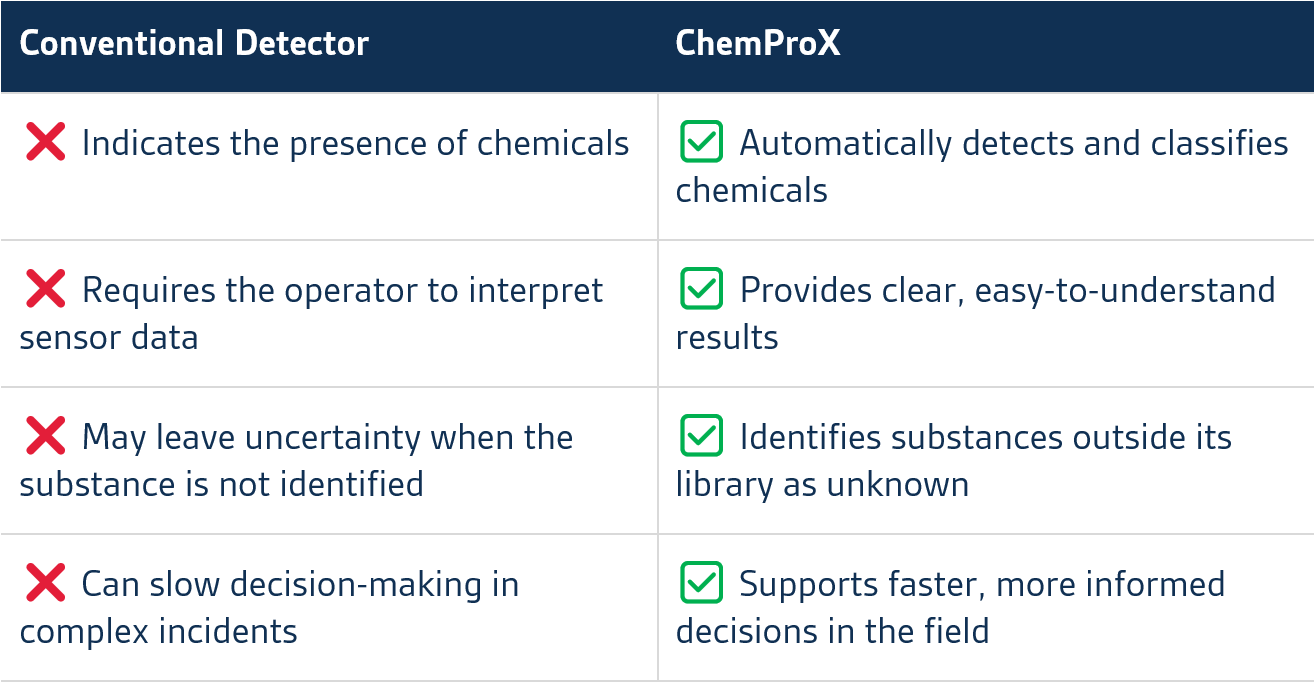
ChemProX is designed to provide processed, actionable information rather than simply presenting raw sensor data. Its user interface displays detection results in a clear, easy-to-understand format, helping responders quickly understand what the instrument has detected without having to interpret complex sensor readings themselves.
Depending on the selected detection mode, ChemProX automatically detects, classifies, and reports chemicals included in its library. If a detected substance is outside the supported library, the instrument clearly indicates that an unknown chemical has been detected rather than presenting an ambiguous result or requiring the operator to guess.
This approach helps turn detection data into practical information for the field, supporting faster and more informed decisions when conditions are changing and time is critical.
One Platform, Multiple Threats
Delivering actionable information is only part of the challenge. The equipment itself also needs to fit naturally into field operations. Every additional instrument requires training, maintenance, calibration, and valuable space on an apparatus. During a dynamic incident, managing multiple devices can increase workload and slow the flow of critical information.
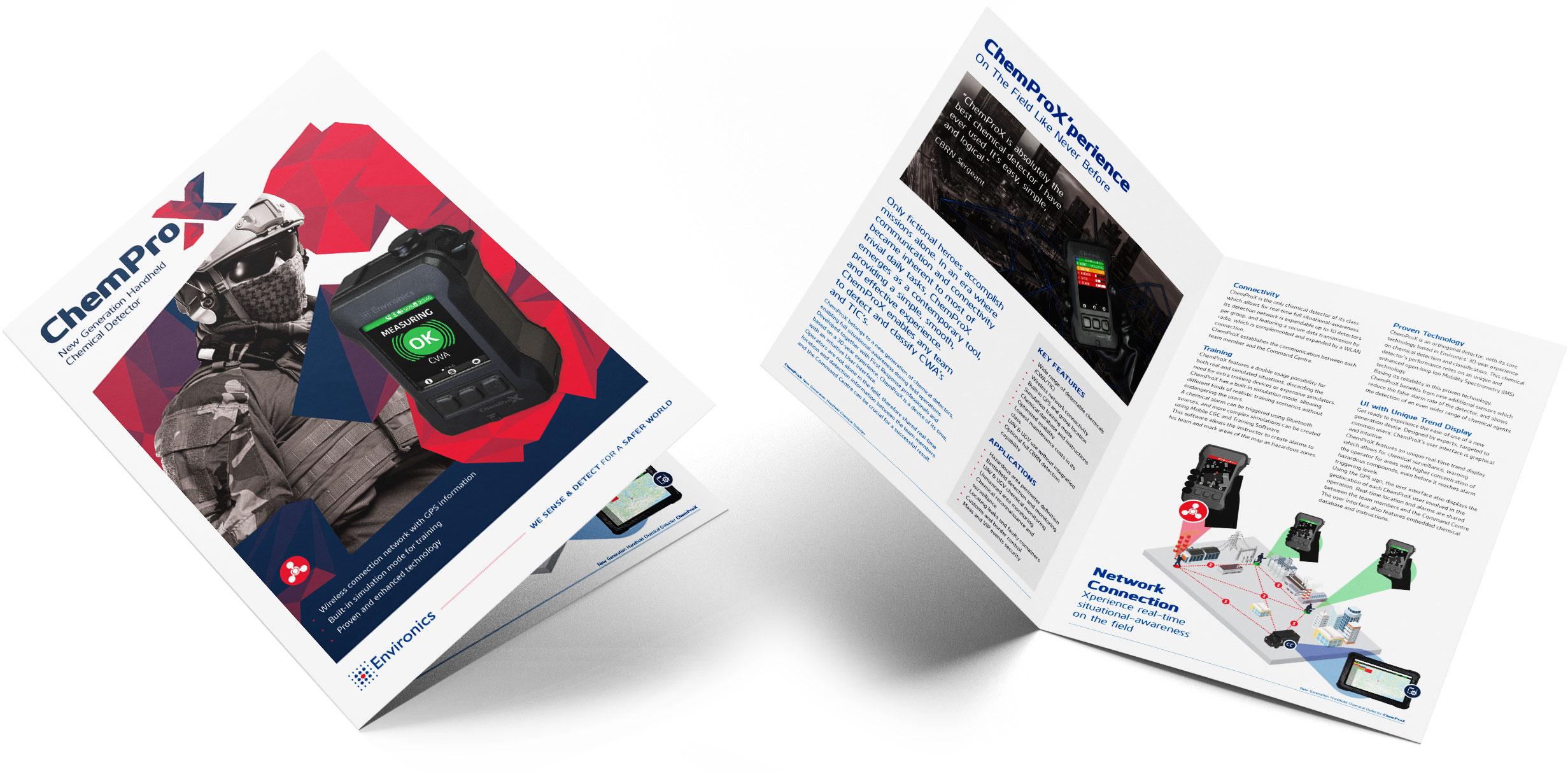
ChemProX addresses these challenges by providing continuous chemical detection while supporting plug-and-play radiation detection and rapid biological screening capabilities within a modular CBRN platform.
The result is a compact solution that supports reconnaissance, hazard identification, incident assessment, and responder safety throughout the operation. Whether the incident involves hazardous chemicals, suspicious substances, or multiple CBRN threats, responders can rely on a single platform to deliver the situational awareness needed to make timely, informed decisions.
Would you like to know more about ChemProX Early Warning Handheld Chemical Detector?
Estamos interesados en la capacitación presencial o virtual por parte ustedes para los miembros de la Policia Nacional del Perú encargados de la prevención, respuesta e investigación QBRN.
Les agradecería se pusieran en contacto con nosotros
mfelipep@policia.gob.pe
marcelofelipeparedes@gmail.com
+51 957238253
Estimados Sr. Paredes,
Muchas gracias por ponerse en contacto con nosotros y por su interés en nuestros servicios de capacitación QBRN.
Ofrecemos una amplia gama de soluciones de capacitación, desde cursos gratuitos de e-learning hasta capacitaciones prácticas presenciales impartidas por nuestros instructores.
Nuestra oferta de e-learning incluye cursos sobre amenazas y riesgos QBRN en general, así como capacitación específica sobre ChemProX. La capacitación online de ChemProX también está disponible en español.
Pueden consultar nuestra oferta de cursos online y registrarse aquí: https://www.environics.fi/training-archive/chemprox-online-user-training/
Además de la capacitación online, ofrecemos capacitaciones presenciales, prácticas y adaptadas a las necesidades de diferentes organizaciones y usuarios operativos. Dependiendo de sus necesidades, la capacitación puede abarcar no solo el uso básico de los equipos de detección, sino también su uso táctico y operativo, ejercicios prácticos y escenarios de respuesta QBRN.
Nuestro representante de ventas responsable de su región se pondrá en contacto con ustedes para conversar con más detalle sobre sus necesidades de capacitación y las diferentes opciones disponibles.
Mientras tanto, les invitamos a conocer nuestra oferta de capacitación online a través del enlace indicado anteriormente.
Atentamente,
Toni