
Integrating Open Loop IMS Technology into Hazard Assessment Operations
No single detector can answer every question during a hazardous materials response. Successful risk assessment depends on selecting the right technology at the right moment.
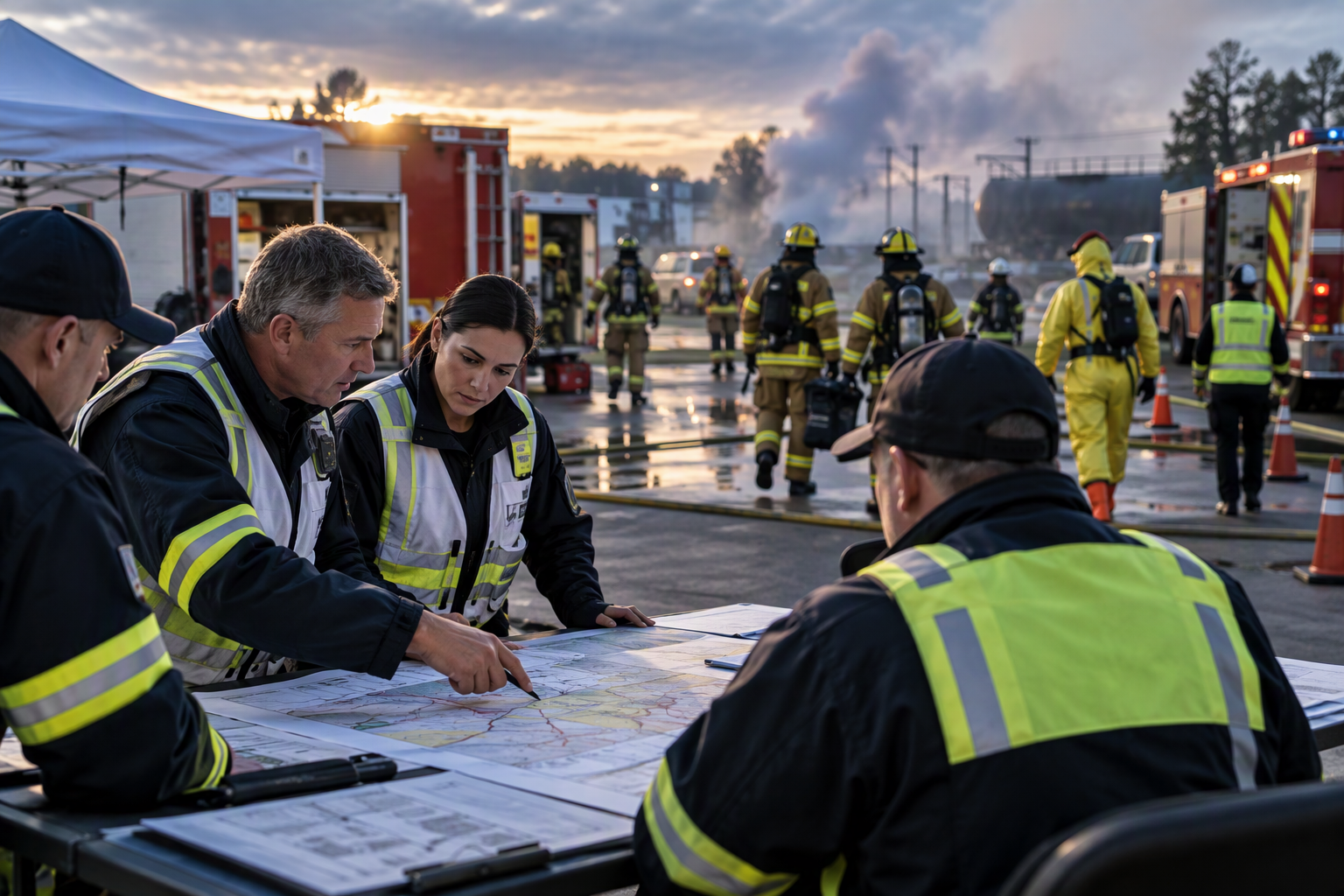
When a fire department, hazmat team, or emergency response unit arrives at a scene with an unknown substance, the first challenge is rarely identification. The first challenge is risk assessment.
Responders must quickly determine whether the threat is flammable, corrosive, toxic, radioactive, or a combination of several hazards. Every operational decision that follows, including PPE selection, evacuation distances, entry tactics, and public protection measures, depends on obtaining this information as early as possible.
What Information Do First Responders Need During the First Minutes of an Incident?
Traditionally, responders begin with fundamental hazmat equipment such as four-gas detectors, pH paper, and radiation meters. These technologies remain essential because they provide immediate information about atmospheric hazards and environmental conditions. However, many incidents involve chemicals that produce little or no response on standard gas detection equipment.
Why Isn’t One Detection Technology Enough for Hazardous Materials Response?
This is where ion mobility spectrometry (IMS) technology becomes a critical capability.
The ChemProX was designed to detect low concentrations of chemical warfare agents (CWAs), toxic industrial chemicals (TICs), and toxic industrial materials (TIMs), providing valuable TIC detection capabilities during hazardous materials incidents. By combining miniature IMS technology with complementary environmental sensors, ChemProX helps responders identify anomalies that may otherwise go unnoticed during an initial hazard assessment.
How Does ChemProX Complement Traditional Detection Equipment?
Rather than replacing traditional meters, ChemProX complements them.
A combustible gas meter can warn responders about flammable atmospheres. pH paper can reveal corrosive hazards. Radiation detectors identify radiological threats. ChemProX adds another layer of situational awareness as a handheld toxic gas detector, helping responders detect and classify airborne chemical threats that require a different operational response.
Operational success begins with understanding what each instrument is telling you and what it is not telling you. The most effective teams integrate multiple technologies into a coordinated monitoring strategy rather than relying on a single device.
Conclusion
The goal is not to find the perfect detector. The goal is to combine complementary technologies to build the most accurate picture of the hazard environment.
Looking for technical specifications and detection capabilities?
Download the ChemProX datasheet to explore how IMS technology supports hazardous materials response and chemical threat detection.
Leave a Reply