

What Are the Main CBRN Threats in the Naval Environment?
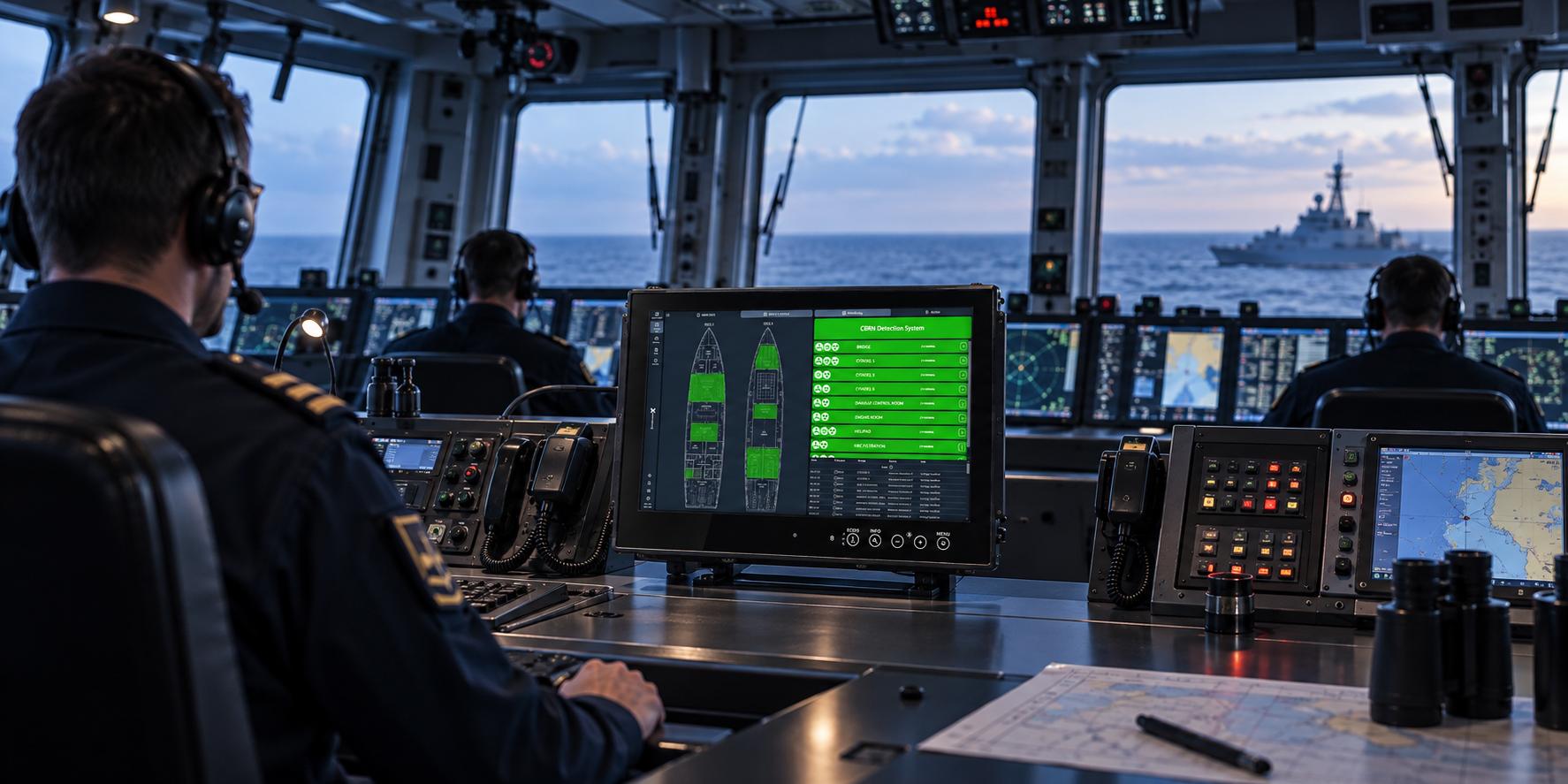
Naval vessels operate in demanding environments where Chemical, Biological, Radiological and Nuclear (CBRN) threats can directly affect crew safety, operational capability and mission continuity. A CBRN incident may originate from military activity, maritime accident or malicious governmental or non-governmental actors. Because a vessel is a confined and highly integrated environment, early detection and rapid response are essential.
How Does Shipboard Information Management Support CBRN Situational Awareness?
Real-time information is essential during a CBRN incident. A situational awareness system combines measurements, alarms, device status and events into a unified operational view. Clear and structured information directs the operator’s attention toward incident handling, reducing reaction time and improving decision-making. Centralized device monitoring and control improve operational efficiency.
Integrated Standard Operating Procedures (SOPs) can guide operators through required actions. Historical data and reporting provide access to previous measurements and incidents for analysis, traceability and post-event evaluation.
How Does CBRN Situational Awareness Improve Naval Operations?
Situational awareness extends beyond an individual ship. CBRN information can be shared between vessels and with higher command levels, creating broader area awareness and supporting coordinated decision-making. Standardized open protocols enable system-to-system integration, allowing CBRN situational data and device control to be exchanged with third-party management systems such as IPMS (Integrated Platform Management System). This improves interoperability and enables integration into wider shipboard and fleet-level command systems. Sharing information between CBRN situational awareness software and IPMS enables larger scale situational management.
Modern CBRN situational awareness systems must also address new requirements beyond traditional detection. Cybersecurity is increasingly important as sensors, control systems and external networks become interconnected. Security needs to be designed in alignment with IEC 62443 principles while supporting cybersecurity practices relevant to evolving regulatory considerations, including the EU Cyber Resilience Act (CRA).
How Does CBRN Training Improve Crew Readiness on Naval Vessels?
Effective response and utilization of situational awareness depend on training. Integrated training tools, which are available 24/7, allow crews to practise realistic scenarios using simulated data without affecting live operations, helping maintain operator readiness.
How Does CBRN System Maintenance Support Naval Operational Availability?
Lifecycle management is equally important for software products as it is for hardware. Continuous system health monitoring, diagnostics and status tracking enable early fault detection and reduce downtime. Centralized software updates support configuration management, while preventive maintenance helps identify issues before they affect operational availability. When faults occur, integrated diagnostic information can also support faster corrective maintenance.
How Does EnviScreenX Support CBRN Situational Awareness as Part of X-System?
Bertin Environics completes X-System concept with EnviScreenX Monitoring and Control Software. X-System is a CBRN Monitoring System, which includes chemical, biological, radiological detectors and situational awareness software. X-System has been designed specifically for fixed and mobile platforms such as critical infrastructure and naval vessels. EnviScreenX enables secure and reliable operation in demanding environments.
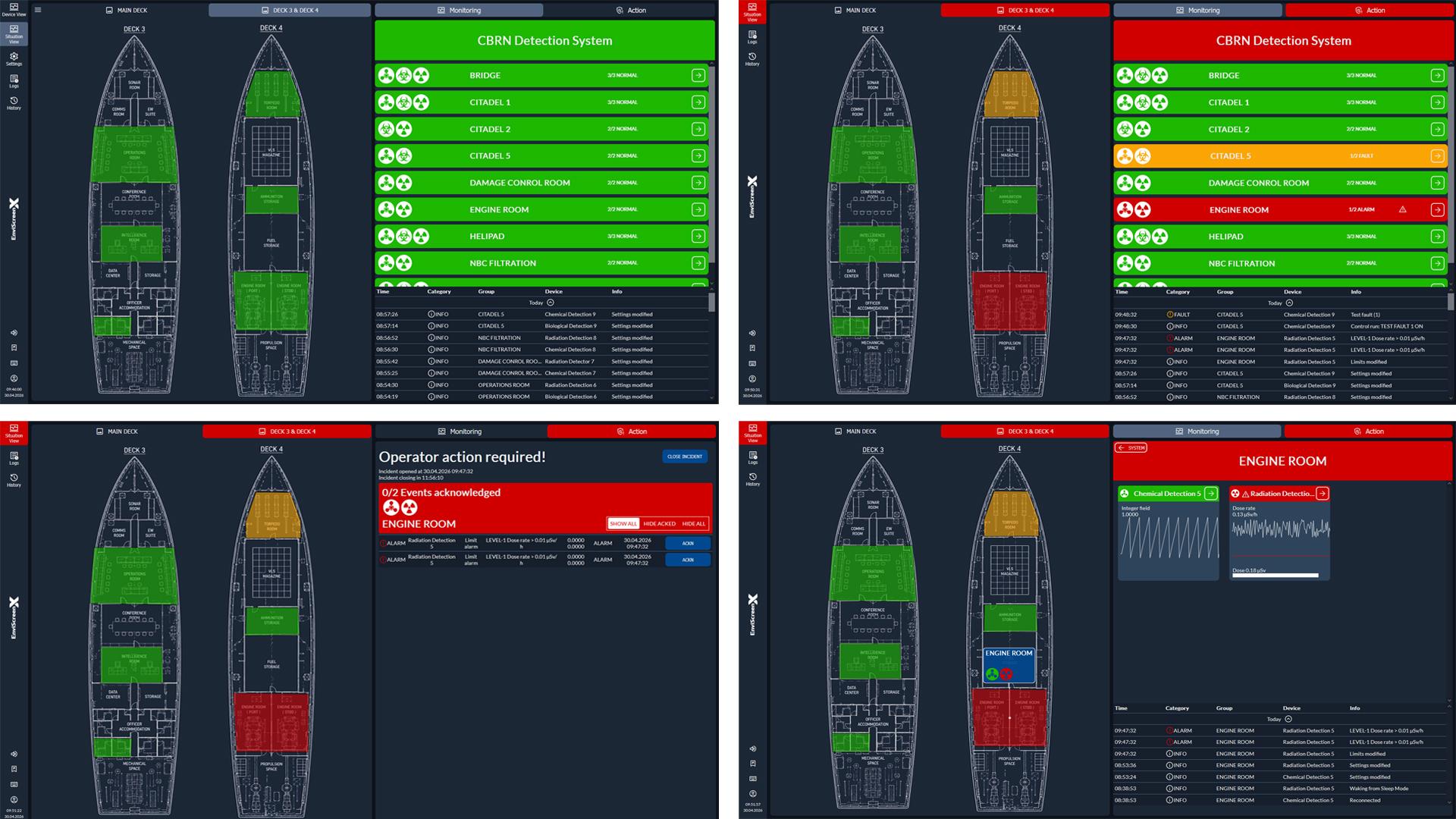
EnviScreenX delivers unified CBRN situational awareness and control for naval vessels, enabling operators to monitor measurements and device status, identify alarms and faults, manage incidents, and access detailed information from a single interface.
EnviScreenX software combines monitoring, control, training, and maintenance into one platform providing clear situational awareness to support fast decision-making.
New state of the art software design reduces complexity, workload, and lifecycle cost and can be scaled from small one or two detector systems into large multi-node deployments containing tens or even hundreds of detectors and user interfaces.
Leave a Reply