


CBRN (Chemical, Biological, Radiological and Nuclear) threat in the naval environment may have been considered in past decades as yesterday’s nightmare. Unfortunately, recent activities in the crisis areas have witnessed that CBRN agents are still one of the tools, which some countries are ready to use to achieve their goals. There hasn’t been any CBRN attacks against naval vessels yet, at least according to public source information, but it is just a matter of time before that kind of madness comes true.
A vessel’s lifecycle normally ranges from 40 to 50 years, and sometimes even longer. Usually after 20 to 25 years of active operational life, all vessels require more or less thorough upgrade to all aging systems. This is a suitable point to renew or upgrade all technical equipment, including the CBRN detection system.

After two decades at sea, even the strongest fleets need renewal, midlife upgrades ensure every vessel, including its CBRN protection, is ready for the missions ahead.
Mid-life upgrade gives also excellent opportunity to add capabilities, which were not considered relevant at the time, when ship was originally built. Adding CBRN monitoring is one of the capabilities, which can relatively easily be added during the rebuilding of the vessel.
CBRN Threats in Naval Environment
The main purpose of the naval vessel CBRN protection is to protect the ship’s crew, when chemical, biological or radiological threats are present. The key to effective protection is fast early warning of the possible threat. It is important to get the warning as soon as possible, because every second is valuable when a CBRN threat is present. External detection system provides information of the threat outside of the vessel and enables timely protective measures, like starting the CBRN filtration system. After protecting the crew and vessel, it is important to monitor internal conditions in addition to outdoor contamination while still being inside the hazard zone.
Midlife Upgrade
The investment in CBRN protection in naval vessels is a relatively small part of the total costs of the vessel’s midlife upgrade, but anyhow it requires thorough consideration and planning. This should be done via discussion with an experienced system supplier who has, in addition to CBRN knowledge, also integration know-how.
When starting to design the CBRN capability for the midlife upgrade, there are two options: either the vessels have existing old CBRN monitoring system, or it lacks the capability totally.
If the vessel has an old system, it is always useful to study the possibility of utilizing the old infrastructure, such as data cabling, air sampling system and power supply. There might be possibilities to minimize the needed work and cost.
When the vessel does not have CBRN detection capability at all before the midlife upgrade, the system design is equal to new build vessel’s system design.
X-System Implementation During Midlife Upgrade
Bertin Environics’ X-System, which includes all necessary components for a fully functional CBRN monitoring system, has been designed to minimize rebuilding needs during the vessel’s midlife upgrade.
- Mechanical installation of the system equipment is relatively easy due to the small size and weight of the devices. Especially when replacing old system with new, the old installation positions can be utilized. Footprint of the new detectors is normally smaller than old units, so old installation locations, if such exists, can mostly be used.
- Air sampling systems are a vital part of the chemical and biological detection. Air sampling systems are unique and specific for each detector type and using them in new system may be challenging and probably not an optimal solution. Without proper sampling system, the reliability of the detection can be compromised. In the worst case, even the detector itself can be damaged due to improper sample handling. X-System air sampling can be taken from the air ducts, which minimizes the through bulkhead openings and makes installation easier and more cost effective.
- Power supply may be limited in an old vessel, and it is important to have both options, AC and DC, available. Preferred power supply for the X-System equipment is AC, but equipment can use either AC or DC power supply, making it easy to fit in any type of power supply network.
- Cabling the new or updated CBRN system in a midlife upgrade can be a big and costly task. X-system has been designed to be able to use different communication methods (ethernet, serial communication, relay, DI/DO…). In the system, ChemProX-DS chemical detectors act as data management points for all other sensors. So, all detectors and sensors, which are physically located in the same area, can be connected directly to ChemProX-DS chemical detectors. This feature minimizes the cabling needs.
Conclusion
After a midlife upgrade the vessel will still serve easily for another 20 years and its capability should be comparable to a newly built vessel. With the new X-System implementation also the CBRN monitoring capability can achieve the same performance level as a newly built vessel but also the same life cycle expectancy as the vessel itself.
Bertin Environics X-System includes all necessary equipment to achieve full CBRN early warning and monitoring capability. System components are new designs, and Bertin Environics can guarantee long life-cycle for the system and full support for the system’s lifetime.
Would you like to know more?
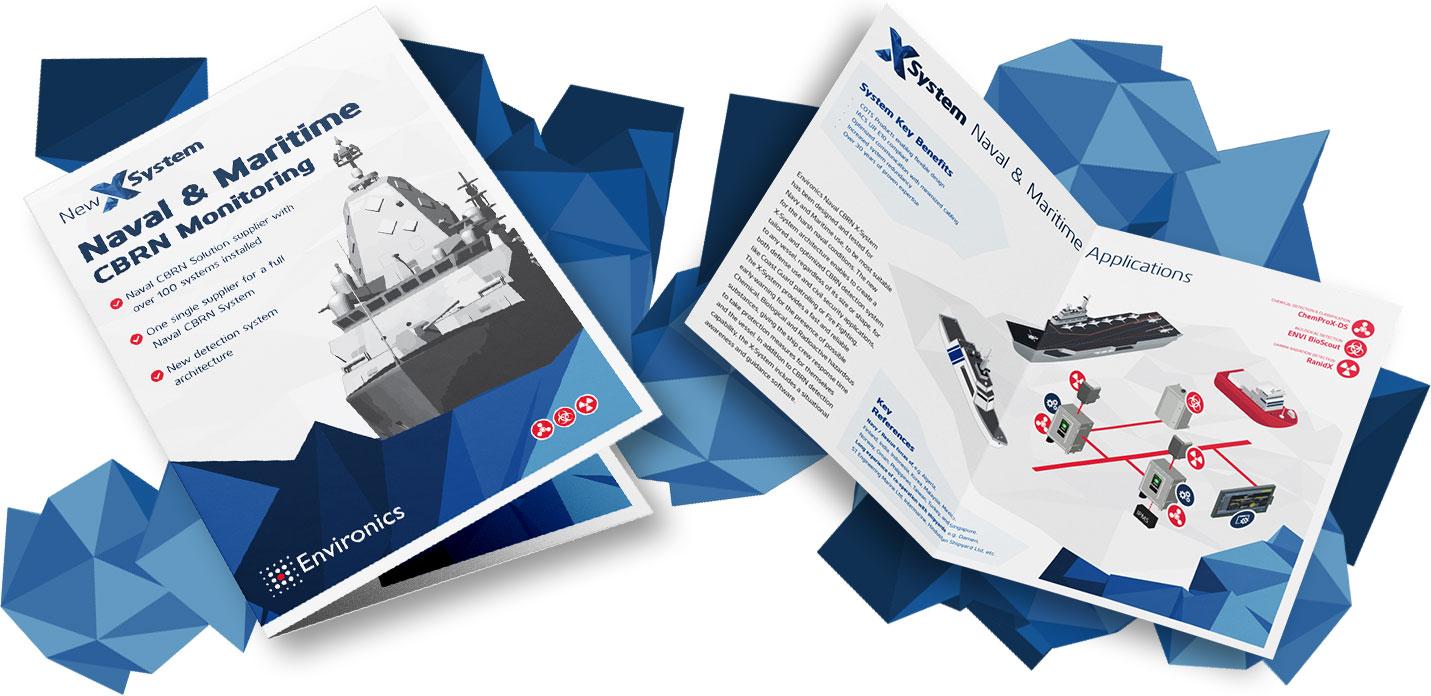
Download the Naval & Maritime CBRN Monitoring Application Note and gain access to exclusive content on X-System when used in vessels.
Leave a Reply